

A few years back, “headless commerce” was one of those tech terms that you’d hear at a conference and ignore. Interesting? maybe. Relevant? someday. Not urgent.
That’s changed.
By 2026, headless commerce will be all around. Don’t mistake it for only something big companies or tech teams talk about anymore. These days, even small brands are tired of slow sites, heavy themes, or not having enough freedom to customize things. Still, don’t pick headless commerce just because everyone else is doing it. You can get advice from experts in the field, like WebPlanex, before heading toward headless commerce.
What is headless commerce, really? Why are brands making the switch? And does it actually make sense for your business in 2026? Let’s dig in.
What Is Headless Commerce?
In a general ecommerce setup, everything is connected.
Your storefront (what customers see)
Your backend (products, orders, checkout, data)
They live together in one system. Change one thing, and it affects the whole structure.
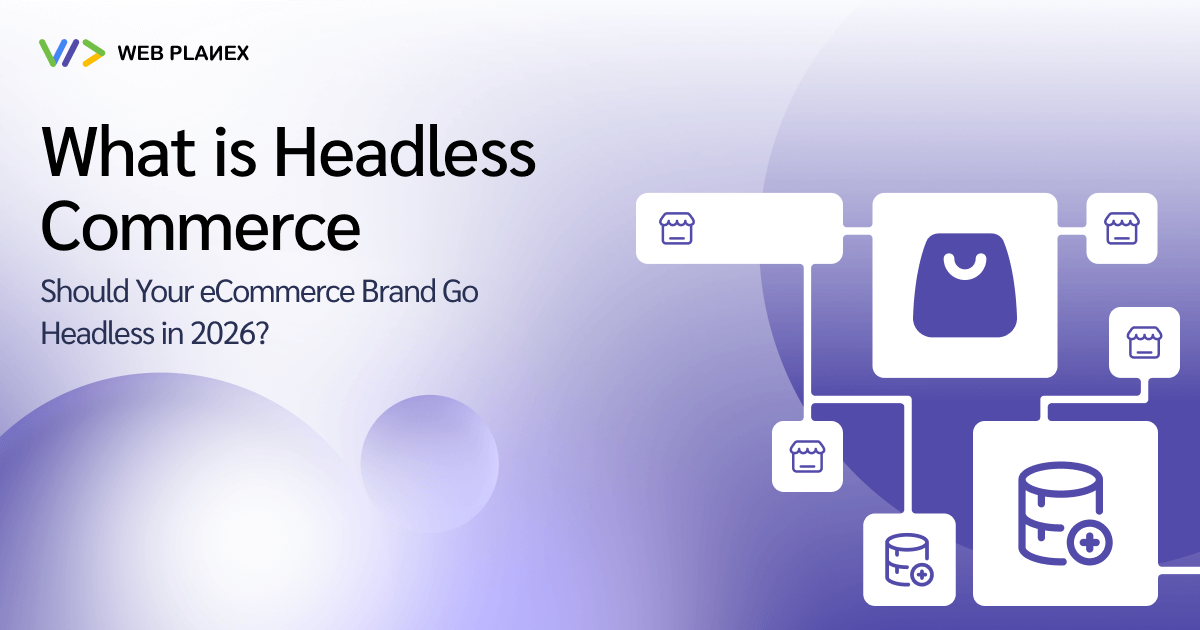
Headless commerce separates these two layers.
The “head” is what people see and use, like a website, an app, or any place customers interact. The backend handles everything under the hood, products, inventory, checkout, payments, all the data. It connects through APIs, but now it doesn’t have to be glued to the front end. That separation changes everything.
Why Brands Started Paying Attention
Most brands don’t go headless because it sounds modern. They do it because something stops working.
Usually it’s one of these:
- Pages loading slower as the store grows
- Theme limitations blocking design ideas
- Mobile experiences feeling clunky
- Developers struggling to customize checkout or UI
- Performance drops during traffic spikes
Headless setups give brands more freedom to fix these issues at the frontend level without touching core commerce logic.
What Headless Commerce Actually Improves
1. Speed and Performance
When the frontend is independent, it can be optimized aggressively.
- Lighter code
- Faster rendering
- Better performance scores
This matters more than ever. Customers expect quick times, especially on mobile. Slow pages not only frustrate the users, but they also slowly kill conversions. We suggest using tools like SpeedBoostr to improve speed and conversion.
2. Design Flexibility
Traditional themes come with boundaries. Headless removes many of them.
Brands can build:
- Custom storefronts
- App-like shopping experiences
- Interactive product pages
You’re no longer designing within a theme. You’re designing exactly what you want.
3. Better Mobile Experiences
Mobile commerce is growing quickly, but many stores still treat mobile as a mini desktop site.
With headless, brands can:
- Build mobile-first layouts
- Create progressive web apps
- Customize mobile flows independently
That control often leads to higher engagement and lower bounce rates.
You might find helpful: How Speed and Mobile Experience Work Together in eCommerce
4. Multi-Channel Selling Becomes Easier
Headless commerce shines when you sell across channels.
- Websites
- Mobile apps
- Marketplaces
- In-store screens
All of them use the same backend, just a unique frontend. So, you don’t have to remake your entire store when you add a channel.
But Headless Isn’t for Everyone
This part gets glossed over far too often.
Headless commerce adds complexity.
You’re dealing with:
- Separate frontend and backend systems
- More development decisions
- Higher setup and maintenance costs
- Greater reliance on technical expertise
If your current store is performing well and your needs are simple, going headless may introduce problems instead of solving them.
Who Should Seriously Consider Going Headless in 2026
Headless commerce tends to make sense if:
- Your store has outgrown standard themes
- Performance issues are hurting conversions
- You want full control over UX and UI
- You’re planning mobile apps or multiple storefronts
- You have access to development resources
It’s less about store size and more about complexity.
Some smaller brands go headless because they value flexibility. Some large brands stay traditional because simplicity works for them.
Common Misconceptions About Headless Commerce
“Headless automatically means faster.”
Not always. Poorly built headless setups can still be slow.
“It removes all platform limitations.”
It removes frontend limits, not business logic or payment rules.
“You need a big team.”
You need the right setup, not necessarily a massive team.
Understanding these nuances matters before making the switch.
What 2026 Changes About the Decision
Here’s what’s different now:
- Better tooling
- More no-code and low-code options
- Improved API ecosystems
- Easier integrations
Headless is easier to get into these days, but you still need to know what you’re doing. The brands that really nail headless in 2026 have a clear reason for choosing it. The ones that run into trouble? They usually jump in just because it seems trendy.
Questions to Ask Before Going Headless
Before making the move, ask yourself:
- What specific problem are we solving?
- Is performance the issue, or the process?
- Do we need flexibility now, or later?
- Can our team support this long-term?
If the answers aren’t clear, it’s worth waiting.
Conclusion
Headless commerce isn’t a trend you have to follow. It’s a tool.
In 2026, some brands jump at this because it brings speed, creativity, and flexibility you just don’t get with the old way of doing things. Others look at it and see a mess of extra steps when all they need is something simple that just works. If your current set-up works good for you, don’t change it, and if headless commerce helps you with a faster and smoother website, and you agree with facing its own issue then definitely go for it.
It’s choosing what works.