

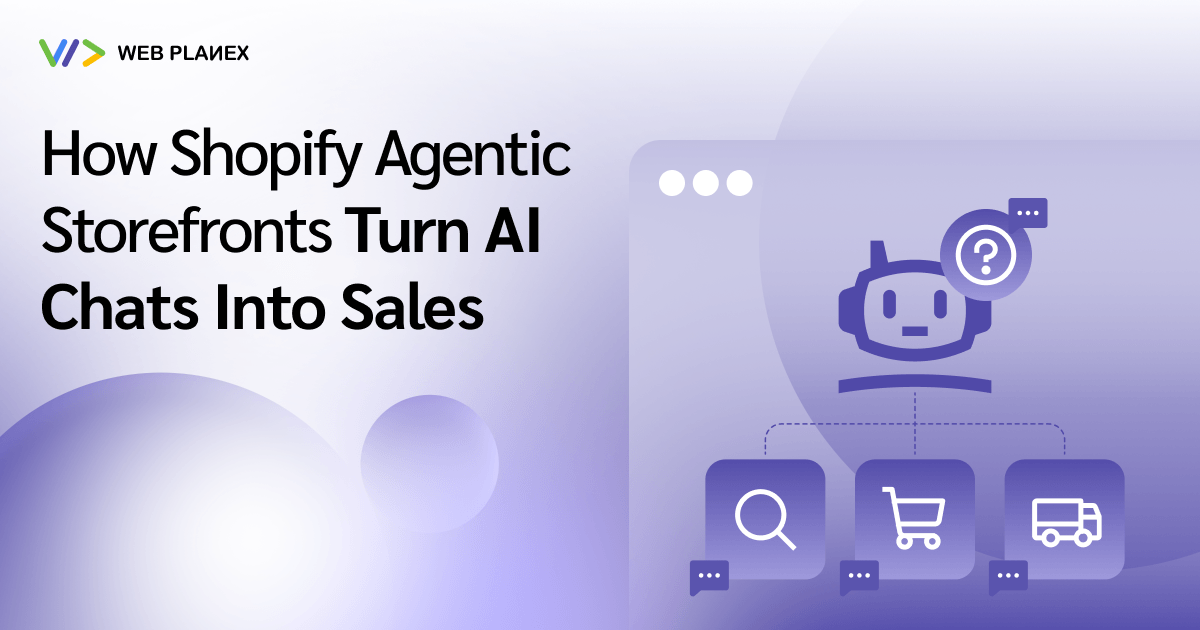
A shopper can now ask an AI chat to compare products before opening a store. Shopify’s agentic commerce setup gives eligible merchants a way to meet that shopper during the conversation. In Q1 2026, Shopify recorded more than eight times the AI-referred sessions and nearly thirteen times the AI-referred orders reported a year earlier. AI-referred visitors also converted nearly 50% better than organic search visitors. These Shopify-wide results show real movement, but they do not promise the same outcome for every store. Catalog quality and checkout readiness still matter.
What Are Shopify Agentic Storefronts?
Agentic Storefronts are sales channels that connect eligible products with ChatGPT, Google AI Mode, Gemini, Microsoft Copilot, Meta, and Shop. Shopify Catalog supplies product titles, descriptions, images, variants, pricing, and availability in a format those services can read.
Eligible merchants can review access under Sales channels > Agentic in the Shopify Admin. This is not a chatbot added to a theme. It makes the product catalog available in conversations happening outside the online store.
How Agentic Commerce Moves a Shopper From Question to Checkout
Imagine someone asks for a fragrance-free moisturizer under $40, suitable for sensitive skin and available within three days. The platform needs more than a product name. It checks attributes, price, stock, and shipping information, then compares the products that match.
The buying path is straightforward:
- The platform reads the request.
- It searches eligible product data.
- It compares suitable items.
- It recommends a short list.
- It opens direct checkout or sends the buyer to the Shopify checkout.
These AI agents cannot fill gaps that a merchant leaves in the catalog. If skin type, ingredients, or delivery details are missing, a suitable item may not match the request. The Universal Commerce Protocol, developed by Shopify and Google, gives approved systems a common way to work with product discovery, carts, and checkout. It supports the transaction path, but the merchant’s product data still provides the facts used in the recommendation.
Is Your Shopify Store Ready for agentic commerce?
Being visible in an AI chat is only one part of the setup. Product details must be accurate, the right channels need access, and the checkout must work for the products being sold. Merchants should also understand what customer data is shared and how orders from these channels will be measured.
Before relying on this sales route, review these five parts of the store:
Check Your Product Information
Check titles, descriptions, images, variants, prices, and inventory. Add useful details about materials, size, intended use, delivery, and returns. These details also help products match more specific customer questions. Our guide to improving Shopify product visibility in AI search covers product data, feeds, and other factors that support discovery.
Choose Which AI Channels Can Access Products
Review which platforms can access the catalog. Shopify’s default setting can activate supported channels and enroll a store in new channels automatically.
Test the Checkout Experience
Test the purchase path outside the storefront. Some direct checkouts do not support subscriptions, bundles, customizable products, B2B-only items, loyalty tools, or certain checkout blocks. AI shopping agents may recommend an item without direct checkout, sending the shopper to the store to finish.
Review Customer Data and Store Policies
Review product visibility, privacy terms, and return policies. A direct-checkout channel may receive contact, address, and order information.
Track Sales and Channel Performance
Track sales, orders, sessions, and conversion rates by channel. Outside platforms can apply their own ranking logic, so Catalog previews cannot guarantee an actual position. When a shopper is redirected to the online store, a proper tracking setup helps you understand what happens next. Our Shopify Google Tag Manager setup guide explains the store-side process.
Where Can Customers Buy Through AI shopping channels?
Customers do not follow the same buying path on every platform. One channel may help them find a product and send them to the store, while another may let them pay inside the conversation. Availability also depends on the store, customer location, product type, and channel eligibility.
Here is how the current purchase journey differs across Shopify’s supported platforms:
| Channel | Current purchase journey |
| ChatGPT | Discovery followed by the merchant’s Shopify checkout |
| Google AI Mode and Gemini | Direct checkout for eligible stores and US shoppers |
| Microsoft Copilot | Direct checkout for eligible US sales |
| Meta | Direct checkout where supported |
| Shop | Shopify-owned discovery and purchase channel |
Google AI Mode and Gemini remain in early access. Their direct checkout also has store, feed, and regional requirements. Merchants can turn off direct checkout and still allow eligible products to be found.
How WebPlanex Supports Shopify AI Shopping
WebPlanex can review catalog fields, metafields, product-feed syncing, channel settings, and checkout-app compatibility. It can also find gaps in bundles, custom products, tracking, and policies.
Technical work can improve readiness, but it cannot guarantee early-access approval, a recommendation, a ranking, or a sale.
Conclusion
For merchants, agentic commerce adds another route from a product question to a purchase. It works best when catalog details are complete, policies are clear, and checkout limitations have been tested. WebPlanex can review the product data, channel settings, and checkout setup to show what is ready and what needs attention before the store relies on this sales path.